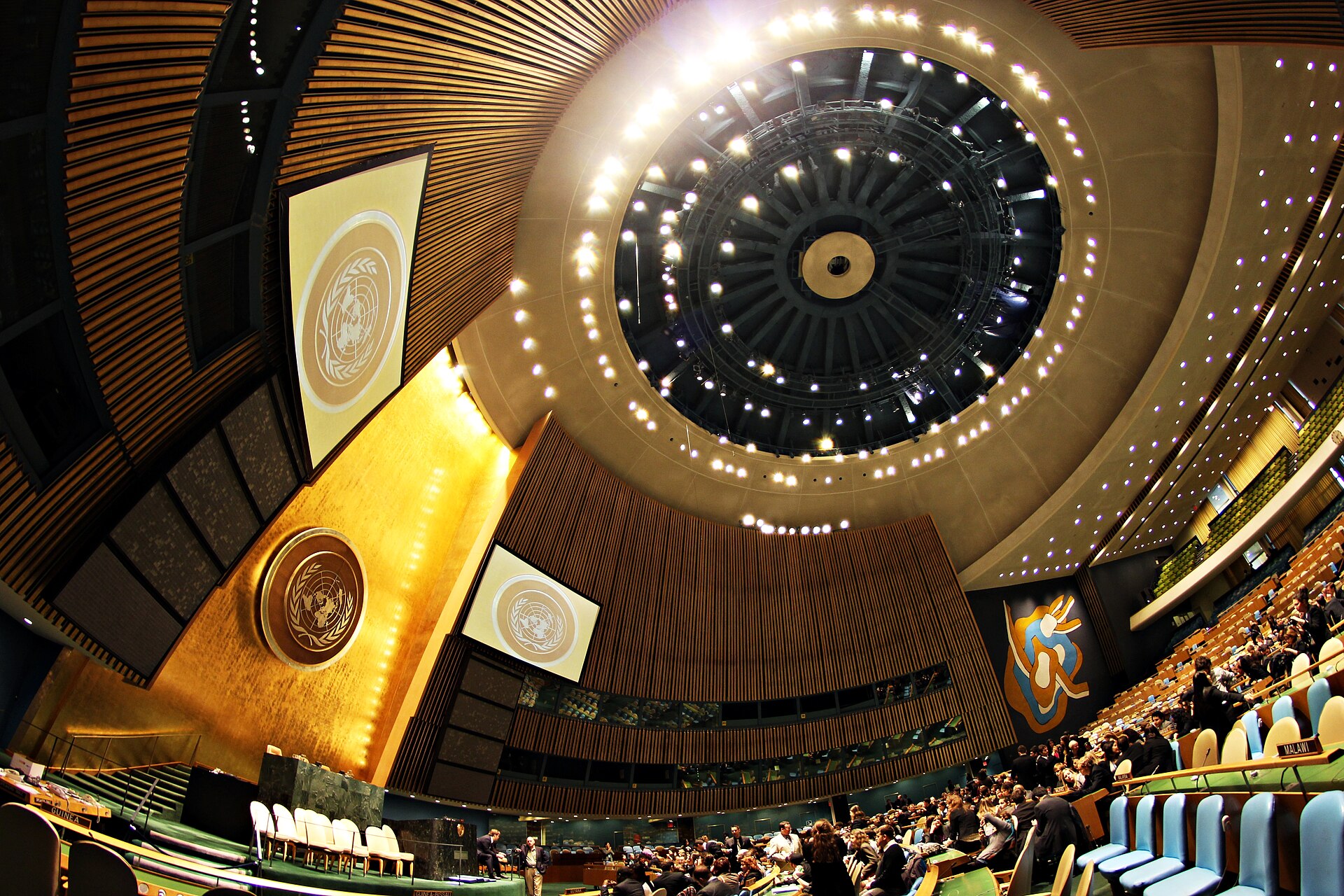
South Africa will step onto the world’s biggest diplomatic stage next month with a clear and confident message: the answer to today’s global challenges is more cooperation, not less, and Africa deserves a permanent seat at the table.
Speaking during a media briefing in Pretoria on Wednesday, Minister of International Relations and Cooperation Ronald Lamola said South Africa will use the 81st Session of the United Nations General Assembly (UNGA) to advocate for a stronger, more inclusive multilateral system, while continuing to push for reforms that ensure Africa is permanently represented on the United Nations Security Council.
“We believe that the answer to the current crisis of multilateralism is not less multilateralism, but better and more inclusive multilateralism,” Lamola said.
Principle and consistency
Lamola said South Africa remains firmly committed to the purposes and principles of the United Nations Charter and international law, including international humanitarian law, whose consistent application he described as essential to protecting civilians, preventing conflict, preserving the sovereignty of states and maintaining international peace and security.
“The credibility of the international system depends on the equal application of its rules, regardless of the power or influence of the states involved,” the Minister said, adding that South Africa would continue working closely with the international community to uphold these principles.
Working with partners old and new
According to the UN’s provisional schedule, the 81st Session opens on 8 September 2026, with the general debate scheduled for 22 to 26 September and 28 September. South Africa will work closely with Bangladesh, which assumes the Presidency of the 81st Session.
Lamola welcomed this year’s theme, “Restoring Trust, Managing Transformation: A United Nations that Delivers for All”, saying it reflects the need for a multilateral system that is more effective, responsive and capable of addressing global challenges.
The Minister also commended Germany for its stewardship of the 80th Session, noting that South Africa demonstrated its commitment by seconding an official from the Department of International Relations and Cooperation to the Office of the President of the General Assembly, specifically to support the advancement of the African agenda.
Punching above its weight
South Africa’s activist diplomacy has long given the country a profile larger than its size, from championing the interests of the Global South to hosting the G20 and now preparing to chair SADC. At UNGA81, that tradition continues, with Pretoria positioning itself as a consistent, principled voice for a fairer world order and for a continent of 1.4 billion people seeking its rightful place in global decision-making.
When the general debate opens in New York in September, Africa’s case will be made, and South Africa will be among those making it loudest.
Photo: commons.wikimedia.org
.jpg)
_(6156349529).jpg)


