23 November 2025
South Africa’s government has delivered one of its most impressive diplomatic achievements in recent years, transforming its G20 leadership moment into a showcase of vision, competence, and global statesmanship. At a time when the world is navigating economic uncertainty, political tensions, and rapid technological change, South Africa stepped forward with clarity, confidence, and a bold commitment to collective advancement.
From the outset, the government demonstrated strategic foresight in shaping the G20 agenda. By prioritising inclusive growth, equitable development, and advocating for multipolar world, South Africa reminded the world that effective leadership is not merely about economic size, but about moral authority and innovative thinking. The government’s approach struck a balance between addressing global challenges and championing the unique needs of emerging economies.
One of the standout successes was the government’s ability to facilitate consensus among nations with widely differing interests. Through skilled diplomacy and tireless engagement, South African officials created an atmosphere of trust and collaboration—proving that the country’s influence extends far beyond its borders. Delegations praised not only the substance of South Africa’s contributions, but also the professionalism and warmth that characterised every stage of the summit.
The government also distinguished itself with its forward-looking stance on technology and sustainable development. With clear proposals on green energy transition, digital inclusion, and infrastructure investment, South Africa demonstrated that it is not merely participating in global conversations but actively shaping them. This assertiveness resonated deeply with leaders and experts alike, positioning the country as a leading voice for a more balanced and just global order.
Beyond the policy achievements, South Africa’s hosting, marked by seamless logistics, vibrant cultural showcases, and exceptional hospitality, earned widespread admiration. It was more than a diplomatic gathering; it was a proud celebration of South Africa’s identity, resilience, and unity.
In delivering a G20 summit that exceeded expectations and strengthened global partnerships, the South African government has reaffirmed its place as a bridge-builder and visionary on the world stage. The success of the event did not simply elevate the nation’s global standing, it inspired confidence at home and reminded the world of South Africa’s enduring capacity for leadership, innovation, and hope.

First & Only African Host of the FIFA World Cup
2010 • South Africa
The only African nation to host the world’s biggest sporting event.
Only African Country With a Commercial Nuclear Power Plant
Koeberg Nuclear Power Station (Cape Town)
Produces ~5% of SA’s electricity.
Only African Member of the G20 (Until 2023)
And the first African country to host a G20 Summit (2025, Johannesburg).
Only African Country to Build & Voluntarily Dismantle Nuclear Weapons
The only nation in the world to develop nuclear weapons independently and then give them up.
Only African Member of the Original BRICS Block
Joined BRICS in 2010, representing the African continent in the founding group.
Co-Host of the Largest Radio Astronomy Project on Earth
Square Kilometre Array (SKA)
The most powerful radio telescope ever built — partly hosted in South Africa.
Only African Country With a Global Financial Centre
Johannesburg
Ranked among major financial hubs worldwide.
Only African Nation to Host All 3 Mega Global Sports Events
Rugby World Cup (1995)
Cricket World Cup (2003)
FIFA World Cup (2010)

The 2025 G20 Summit, held in South Africa, marks a significant chapter in the country’s history and in the context of global diplomacy. Chaired by President Cyril Ramaphosa, the event showcases South Africa as an emerging power on the world stage and highlighted the importance of collaboration among influential nations.
Cyril Ramaphosa: A Trailblazing Leader
Cyril Ramaphosa, known for his calm demeanor and diplomatic acumen, took the helm of this prestigious summit at a time of significant global uncertainty. His leadership style, characterized by inclusivity and negotiation, resonated well in a room filled with some of the world’s most powerful leaders. As the host, Ramaphosa not only emphasized the role of African nations in the global arena but also sought to build partnerships that can promote sustainable development and economic growth.
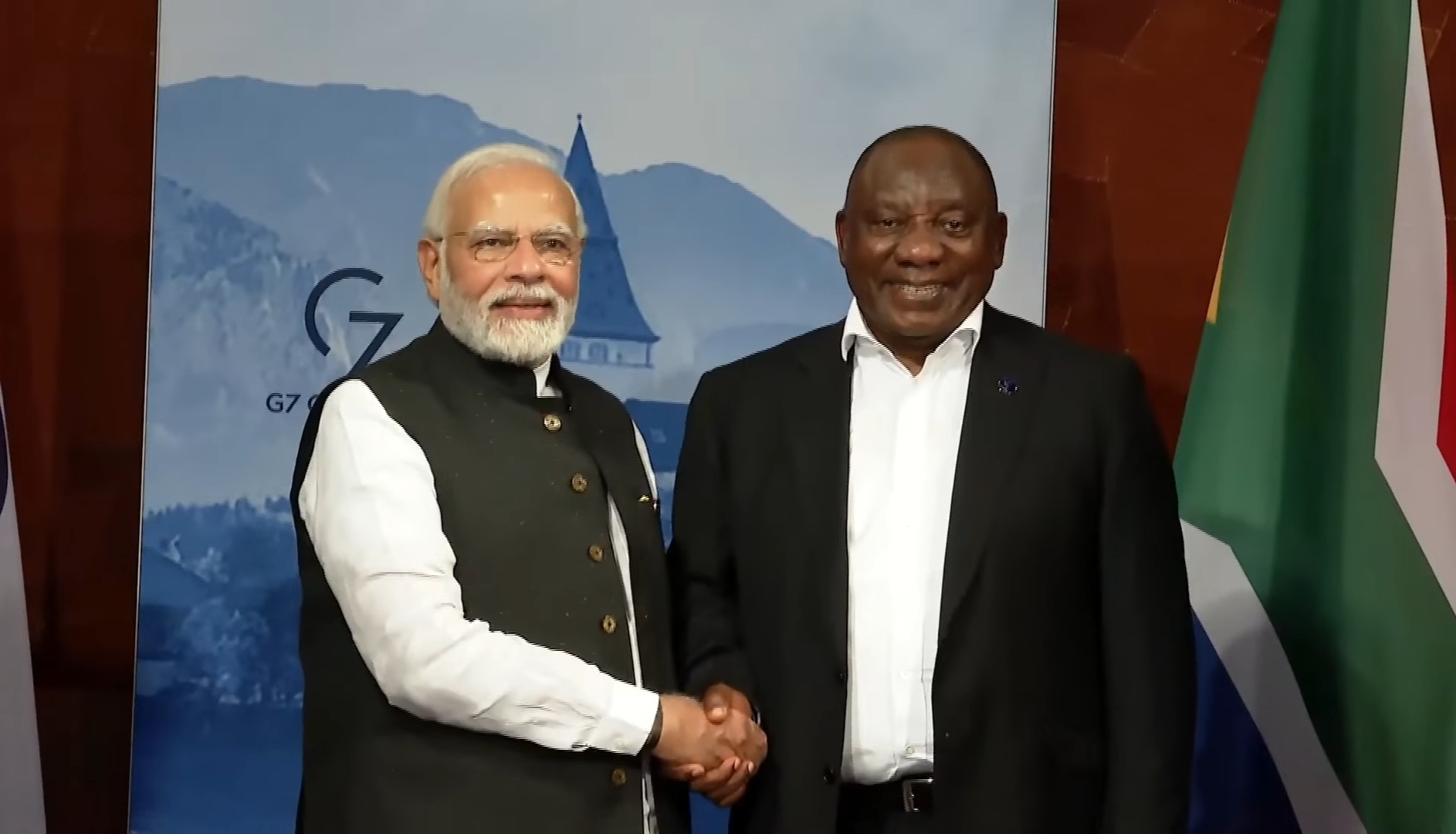
Among the leaders present are Brazil's President Luiz Inácio Lula da Silva, India's Prime Minister Narendra Modi, China's Premier Li Qiang, and European Union President Ursula von der Leyen. Each of these leaders brings unique perspectives and experiences, making the G20 a vibrant platform for dialogue and collaboration.
Lula da Silva is A key figure in Latin America known for his focus on social equity, Lula's presence underscores the importance of cooperation among emerging economies.
Modi Renowned for his assertive leadership style, Modi represents the interests of a nation on the rise, eager to assert itself in global affairs.
Li Qiang The representative of China, a global economic powerhouse, ensures that Asian perspectives are well represented in discussions about trade and diplomacy.
-Ursula von der Leyen As the EU's strong voice, she emphasizes the unity of European nations and the importance of addressing global challenges collectively.
These leaders’ attendance signals a powerful network of alliances forming around Ramaphosa, as they seek mutual benefits in the face of pressing global issues such as climate change, economic instability, and geopolitical tensions.
The Impact of Collaborative Diplomacy
The collaborative spirit that emerged was more than just a professional courtesy; it symbolized a new era of diplomacy where non-Western voices are gaining more attention. For Ramaphosa, these relationships reinforce his administration's vision of a multipolar world where diverse perspectives can help tackle global problems.
A Shift from American Dominance
In stark contrast to the collaborative atmosphere at the summit, U.S. President Donald Trump remained a figure of contention with his past tantrums and isolationist stance. Several leaders openly acknowledged that Trump's approach to diplomacy does not resonate with a world that increasingly favors cooperation over confrontation. His criticisms and emotional outbursts seem distant as global leaders choose to engage and collaborate rather than allow themselves to be distracted by unpredictable rhetoric.
This shift indicates that the era of American dominance is being challenged. The focus is now on collective global governance, with leadership responsibilities spreading across multiple nations rather than being concentrated in Washington. In ignoring Trump’s missteps and showcasing their own cooperative approaches, these leaders collectively signal a desire for a future defined by collaboration, resilience, and shared goals.
A New Dawn for Global Diplomacy
The 2025 G20 Summit in South Africa, under the guidance of Cyril Ramaphosa, may very well be remembered as a pivotal moment in shaping global relations. With heavyweights gathered to champion cooperation and collective action, the summit's legacy promises to uplift not only South Africa but the global context as well.
As emerging powers strengthen ties and engage in meaningful dialogue, the traditional power dynamics shift. For Ramaphosa and his allies, this summit signifies an opportunity to assert their influence and create a united front addressing the challenges of today a true testament to the changing tides of global diplomacy.

South Africa had spent months preparing to host the G20 - a moment of continental pride, a diplomatic milestone, and a rare chance for Africa to command the world’s attention. The banners were hung, the motorcades routed, and the nation’s voice carefully crafted for the global stage.
But one chair was glaringly empty.
The United States, in a surprising turn, announced it would not attend. Their absence cast a long shadow, sparking speculation, political theatre, and whispers of yet another fracture in global diplomacy.
Some expected South Africa to bend under the pressure, to make concessions, to negotiate in private, to fly across the ocean and deliver diplomatic reassurances directly to Washington.
But Pretoria did something few expected.
It said no.
The message was clear: “We are the host nation. We will not travel to the United States to hand over what must be delivered on South African soil. The world comes to the chair, not the other way around.”
Those words held weight — more than anyone anticipated. The firmness of South Africa’s stance forced a recalibration in Washington. What began as a boycott suddenly looked like a diplomatic miscalculation. Behind closed doors, advisors warned of the optics: the U.S. side lining an African host, ceding influence to rivals, allowing a historic summit to proceed without its voice.
And so, in a move that stunned commentators, the United States reversed course, catapulting back into the G20 with full force. Their delegation is expected to make high-stakes proposals, and bring desire to shape the narrative.
South Africa, calm and unyielding, has been anchoring the proceedings with global priorities: equitable finance, development reform, and respect for African leadership.

In an unprecedented move that has escalated a simmering diplomatic rift into a full-blown public stalemate, the South African government has declared it will not travel to the United States to formally hand over the G20 presidency, a tradition that symbolizes the smooth transition of global leadership.
According to a firm stance from Pretoria, the onus is now entirely on Washington. The United States must either send a delegation to South Africa to collect the symbolic presidency or proceed to host the next G20 leaders' summit without the customary official handover ceremony.
This bold declaration comes after months of rising tensions between the two nations. The situation deteriorated significantly when former President Donald Trump announced that the US would boycott the Johannesburg summit this week, simultaneously publicly disparaging South Africa's role within the G20 framework.
The handover ceremony, while symbolic, is a key ritual in the G20 process, representing continuity and collaborative spirit. South Africa's refusal to undertake the journey is seen as a powerful rebuke of Washington's dismissive stance, turning a procedural formality into a test of diplomatic respect.
With the current summit in Johannesburg now underway, the global community is watching intently. The question is no longer just about the agenda for the next year, but about the integrity of the G20's own traditions and how the United States will navigate a diplomatic challenge of its own making.

BOKSBURG, Gauteng (13 Nov 2025) - President Cyril Ramaphosa today affirmed the government's steadfast commitment to an unprecedented R1 trillion infrastructure investment plan while simultaneously declaring "war" on the criminal elements disrupting the sector, including construction mafias and cable thieves.
Delivering the keynote address at the 2025 National Construction Summit, held at the Birchwood Hotel in Boksburg, President Ramaphosa described the construction industry as a critical driver for the nation's economic growth and job creation.
"The purpose of this summit is to ensure that these investments and reforms do indeed turn the country into a building site," Ramaphosa stated. "We want to see cranes and construction vehicles in cities, townships, villages, and rural areas".
R1 Trillion Investment and Strategic Reforms
The President highlighted the strategic shift in government spending from consumption to long-term investment, with the R1 trillion allocated over the medium term representing the largest infrastructure allocation in democratic South Africa's history.
To facilitate this massive undertaking, the government is implementing key reforms:
Encouraging Private Investment: Amendments to regulations on Public-Private Partnerships (PPPs) and new guidelines for unsolicited bids are being introduced to attract greater private sector involvement.
Combating Blockages: Every Public Works department will establish a "Procurement War Room" to identify and address blockages, ensuring projects move efficiently from the bidding phase to the construction site without undue delays.
Professionalising the Sector: Efforts are underway to professionalise the built environment within the public sector to ensure projects are completed on time, within budget, and without wastage.
A Stance Against Crime
A significant portion of the President's address focused on tackling the rampant criminal activity that has long plagued the industry and choked investment. He praised the progress made by law enforcement agencies and partnerships with the industry following the 2024 Durban Declaration.
"We will not negotiate with construction mafias, and we will certainly not yield to cable thieves," Ramaphosa asserted. "In fact, we have declared war on construction mafias and they will not stop us".
Minister of Public Works and Infrastructure, Dean Macpherson, echoed the sentiment, noting a "massive drop" in site disruptions in former hotspots like KwaZulu-Natal and 176 convictions against individuals involved in construction-related extortion and intimidation.
Building a Better South Africa
The summit, themed “Unlocking Infrastructure Delivery: Raising Construction Industry Performance,” brings together leaders from government, business, labour, and civil society to enhance the program of action. Ramaphosa emphasised the social impact of the infrastructure drive, linking it to the need for essential services like safe school sanitation, classrooms, and bridges to reduce inequality and restore dignity.
With the construction industry already adding an estimated 176,000 jobs in the third quarter of 2025, the President expressed confidence that the summit's outcomes would place infrastructure development on a new, accelerated trajectory, turning plans into tangible projects for a working nation.
The President's full keynote address can be found on the South African Government website.
As the world grapples with economic uncertainty, political tension, and the growing impact of climate change, the eyes of the international community turn to the upcoming G20 Summit, where leaders from the world’s largest economies are set to convene to discuss pressing global challenges.
The summit, which will take place in South Africa is expected to bring together heads of state, finance ministers, and policymakers from the Group of Twenty (G20) — a forum representing around 85% of global GDP and two-thirds of the world’s population.
Among the key issues on the agenda are global economic stability, sustainable development, and energy security. There will also be renewed focus on debt relief for developing nations, digital transformation, and the transition to clean energy, particularly as developing countries call for greater financial and technological support from wealthier economies.
Experts suggest that the tone of this year’s summit will be shaped by the current geopolitical landscape, including ongoing conflicts, trade tensions, and concerns about the resilience of global supply chains. With the world still recovering from the effects of the pandemic and inflationary pressures affecting households globally, expectations are high for concrete action rather than symbolic declarations.
Climate change is likely to dominate discussions once again, with environmental groups urging G20 leaders to commit to stronger emissions reduction targets and increased investment in renewable energy infrastructure.
The summit’s outcome will be closely watched by economists, businesses, and citizens alike, as decisions made here could have a significant impact on global markets, international cooperation, and the pace of climate action.
As one diplomat remarked ahead of the meeting:
“The G20 remains one of the few tables where every major economy still sits together. What’s decided here will shape the world’s next decade.”
The latest and greatest as far as Sport is concerned
The latest in Technology and Business, in South Africa and Beyond