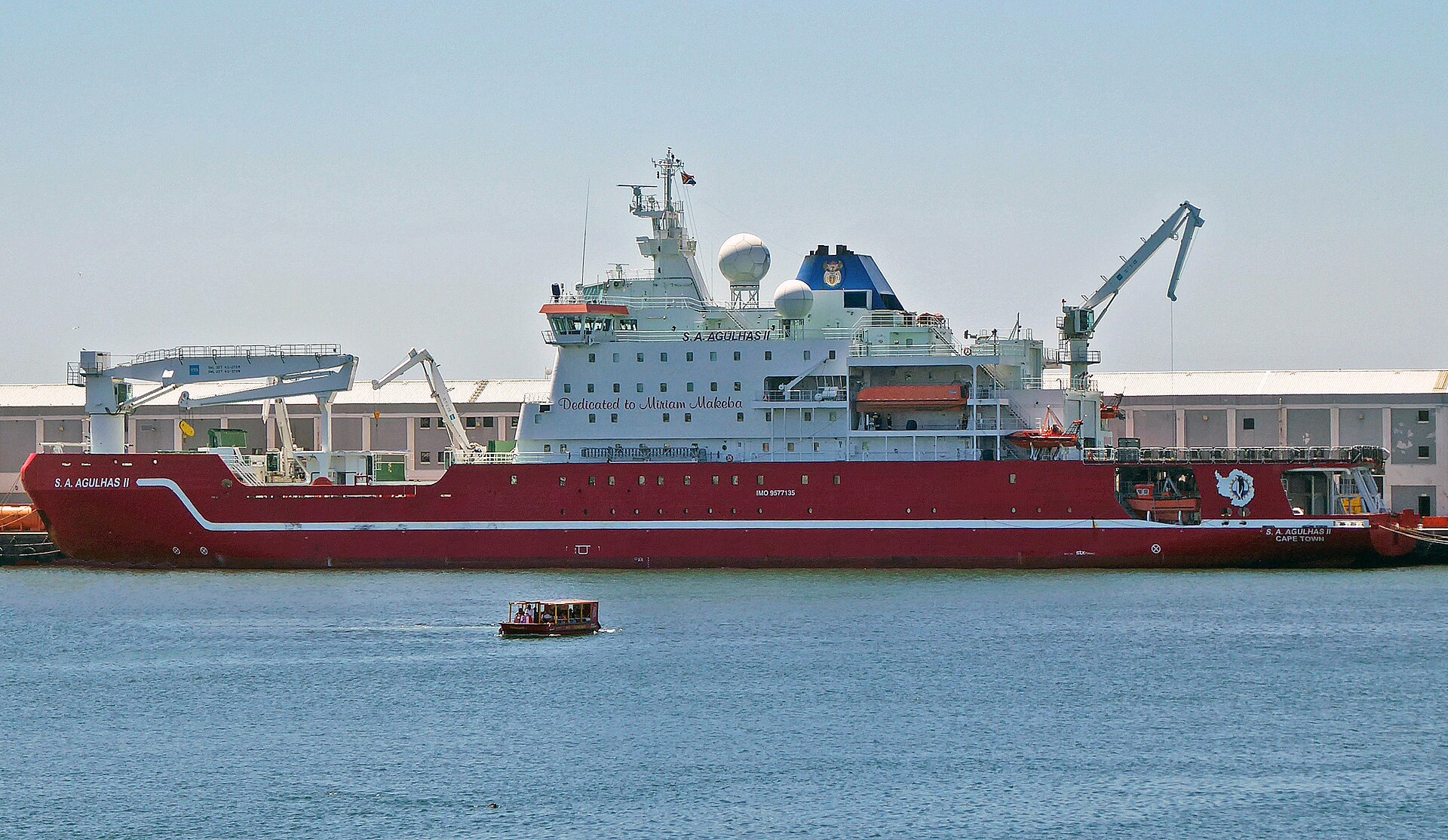
A decade ago, a young African researcher stepped aboard South Africa’s flagship research vessel, the R/V SA Agulhas II, as an early-career trainee – a berth on a ship, some mentorship, and a first taste of multinational ocean science. This year, that same scientist returned to sea in her own region as co-cruise leader, responsible for coordinating an entire international research expedition.
The story, told by Dr Zoleka Filander – an offshore benthic ecologist at the Department of Forestry, Fisheries and the Environment – in an opinion piece for SAnews, is a striking illustration of South Africa’s quiet leadership in growing the next generation of African scientific leaders.
South Africa’s floating classroom
The transformation began with the second International Indian Ocean Expedition (IIOE-2), a multinational programme undertaken in 2017 aboard the South African-flagged SA Agulhas II. Established to advance understanding of the Indian Ocean while strengthening regional scientific capacity, the South African-led effort invested deliberately in early-career researchers from Mozambique, Tanzania, Kenya, Egypt and Nigeria.
What seemed at the time a relatively modest investment – a place on a research cruise, guidance from senior scientists, exposure to international oceanography – has compounded into something far greater.
The multiplier effect
As Filander writes, the achievement lies not only in one person’s advancement but in “the transition from trainee to mentor, from participant to leader, and from beneficiary to someone creating opportunities for others”. The investment, she notes, has come full circle.
This multiplier effect is the most overlooked outcome of capacity development. Programmes count workshops delivered and certificates awarded, but the real return arrives years later – in the generations of scientists that yesterday’s trainees go on to train, mentor and inspire themselves.
“A tree planted today does not provide shade tomorrow,” Filander writes. “An emerging researcher boarding a research vessel for the first time may not immediately transform ocean science. Given mentorship, opportunity and sustained support, however, that same individual may one day lead international expeditions, shape marine policy and inspire the next generation of scientists.”
Why it matters for Mzansi
As the global scientific community embraces equitable partnerships and locally led research, South Africa’s approach – treating participants not as passive recipients of training but as future leaders – is proving its worth across the continent. The SA Agulhas II has carried South African science from the Indian Ocean to Antarctica, and with it, a philosophy: exposure opens the door, and capacity development ensures someone eventually holds the key – then opens that same door for those who follow.
One berth on one ship, ten years ago. Today, an expedition leader. That is South African investment in people, paying the kind of dividends that never stop compounding.
Photo: commons.wikimedia.org



.jpg)
Leave a Reply