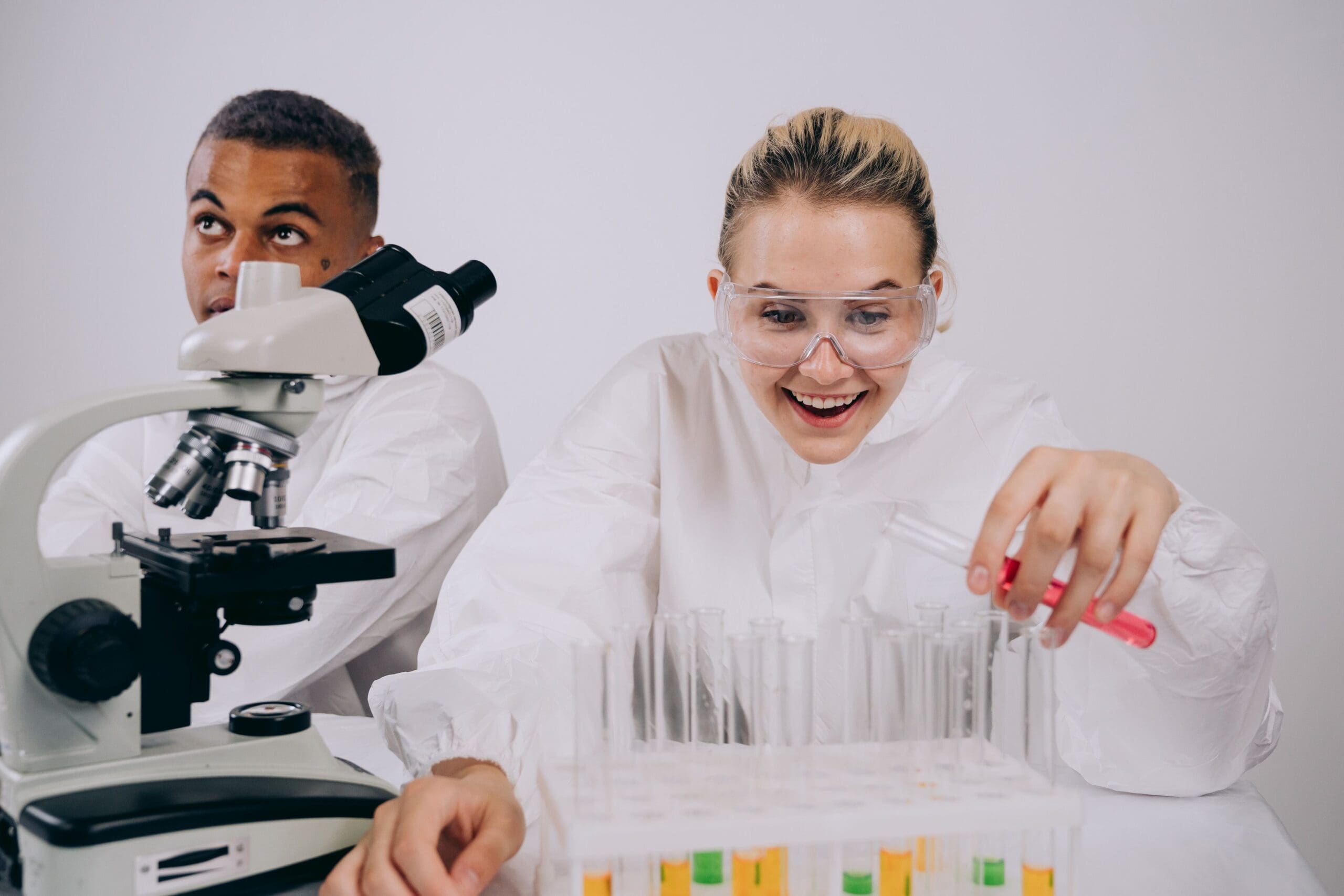
South Africa has just wrapped up its first ever National Science Month – an expanded version of the annual National Science Week held throughout July under the theme Science, Technology and Innovation Are for Everyone. And as Explain News reports, local researchers gave the country plenty to celebrate.
Home-grown green hydrogen
One of the month’s biggest moments came in Sasolburg, where South Africa launched a locally developed 2kW Proton Exchange Membrane electrolyser – a machine that uses electricity to split water into hydrogen and oxygen. When powered by renewable energy, the hydrogen it produces is a cleaner alternative to fossil fuels for transport and heavy industry.
The laboratory-scale unit was built using publicly funded South African intellectual property, through a partnership between the Department of Science, Technology and Innovation, North-West University, the South African National Energy Development Institute and Sasol. Researchers will now use it to test green hydrogen technology under real South African weather and renewable-energy conditions – building the local skills base for an industry the country intends to compete in, rather than importing every piece of the puzzle.
A telescope for the community
Outside Hammanskraal, a compact, low-cost Transient Array Radio Telescope is giving researchers and community members direct access to the radio sky. The open-source instrument monitors the whole sky and can track satellites, near-Earth objects and brief cosmic events. Installed in 2025, it returned to the spotlight during Science Month with a four-day workshop that combined astronomy with African Indigenous Knowledge – putting real research equipment and training within reach of young people who might otherwise never touch a telescope.
Ancient jaws, modern insights
Wits University researchers examined 71 fossil jaws from human ancestors that lived between 5.3 million and 2.6 million years ago, finding that early members of the Homo group suffered far more loss of tooth-supporting bone – linked to gum disease – than their Australopithecine relatives. The team proposes that gum disease may have interacted with genetic changes that produced smaller teeth and weaker chewing muscles, possibly contributing over generations to our flatter modern faces.
Stronger institutions, smarter medicine
The South African Medical Research Council established seven new extramural research units from 1 April, bringing its total to 30. Based at universities and partner institutions, the units tackle pressing health challenges from childhood brain conditions and pre-eclampsia to cancer treatments – with one using artificial intelligence to improve public-health decisions and another developing nano-sized drug-delivery technology.
The flower that chooses sides
And in a delightful piece of pure discovery, an international team including University of Cape Town researchers identified two genes that decide which way South Africa’s butterfly lily bends its flowers – each plant leans consistently left or right, an arrangement that reduces self-pollination. They even found that gravity helps guide the flower’s development, a clue to how living things break left-right symmetry.
From cleaner energy to ancient teeth and flowers with a preferred direction, South African science is asking big questions – and finding some wonderfully unexpected answers.
Photo: explain.co.za







Leave a Reply