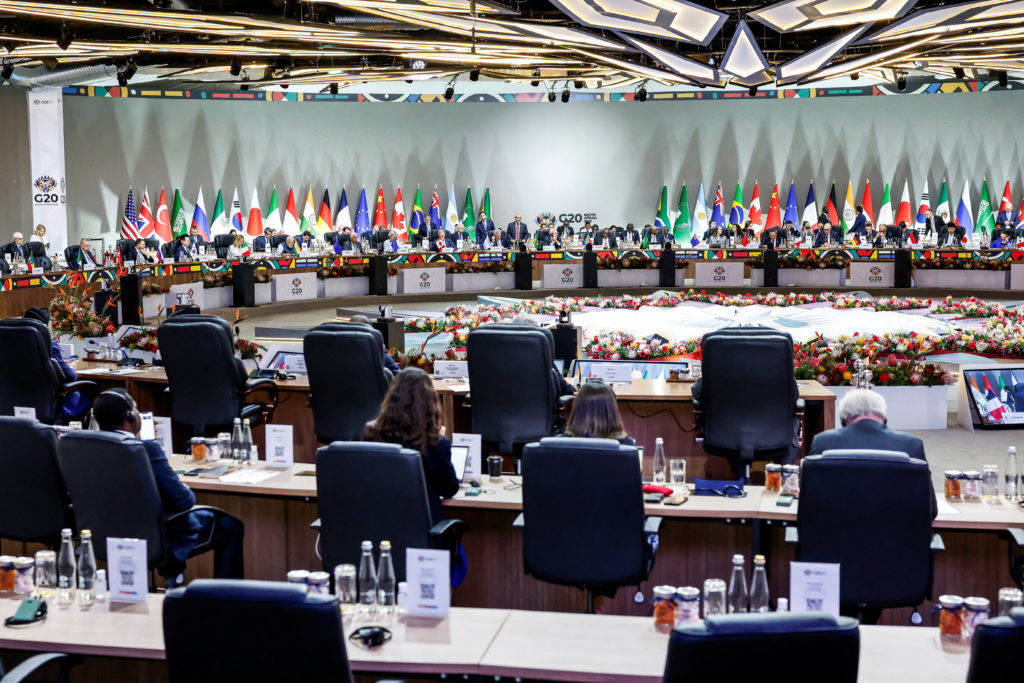
South Africa has closed its G20 presidency by securing a joint leaders’ declaration at the Johannesburg summit, marking the first time the group of leading economies has met on African soil. President Cyril Ramaphosa presided over the gathering, which ended on Sunday, 23 November 2025, and formally closed proceedings by striking the gavel.
The summit produced a 122-point Johannesburg declaration that placed the priorities of Africa and the Global South at its centre, even as the United States boycotted the two-day talks entirely.
A declaration centred on the Global South
Leaders adopted the 122-point declaration on the opening day of the summit, breaking with the long-standing tradition of issuing a closing statement at the end of proceedings.
According to the brief, the declaration emphasised the priorities of Africa and the Global South, foregrounding issues that have often struggled for prominence in past G20 discussions. Key themes included:
- Climate change and the global response to it
- Debt relief for developing economies
- Green energy transitions
The early adoption of the text underscored South Africa’s effort to lock in consensus and ensure the summit delivered a substantive outcome under its presidency.
Broad backing despite a US absence
A range of major economies attended the Johannesburg summit and backed the declaration. According to the brief, China, Russia, France, Germany, the United Kingdom, Japan and Canada were among those that supported the text.
The most striking feature of the summit, however, was who was not present. The Trump administration boycotted the two-day talks, with no US delegation accredited for the event. As reported by PBS News, the summit ended with a glaring US absence following the boycott.
The decision left the world’s largest economy on the sidelines as fellow members endorsed a wide-ranging agenda shaped by an African host.
A test of multilateralism
For South Africa, the summit represented both a logistical milestone and a diplomatic statement. Hosting the first G20 leaders’ meeting on the African continent gave the country a platform to steer the agenda toward concerns long voiced by developing nations.
President Ramaphosa’s role in presiding over the summit and securing the declaration was central to that outcome. The Mo Ibrahim Foundation framed the achievement as evidence that “multilateralism lives,” arguing that South Africa’s G20 presidency had proved as much.
The successful adoption of the 122-point text, despite the absence of one of the group’s most powerful members, suggested that consensus could still be reached among the assembled leaders.
With the gavel struck and the declaration adopted, South Africa’s presidency drew to a close having delivered a joint statement that foregrounded climate action, debt relief and the broader priorities of the Global South. The summit’s location and its outcomes leave a marker in the G20’s history as the first such gathering hosted on African soil.



Leave a Reply