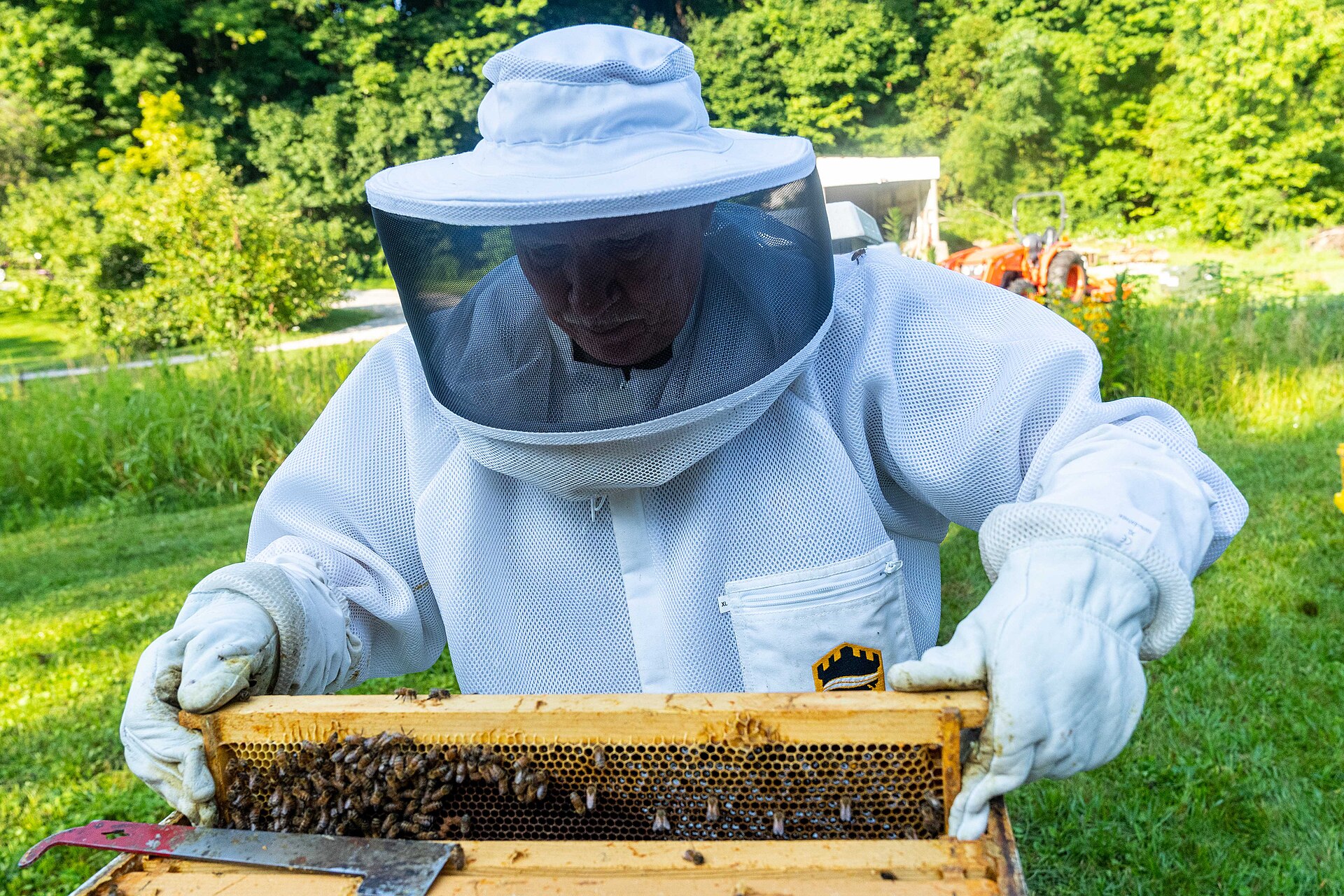
A casual conversation with a German tourist in a Vilakazi Street restaurant in Soweto has grown into one of South Africa’s most promising women-led agribusinesses. Seven years on, North West farmer Mems Ramaila runs Bee African, a thriving beekeeping enterprise that is winning recognition in an industry still largely dominated by men.
Ramaila, a lucerne farmer based near Brits, told SAnews that her journey began with a simple question: what could she do with the bees that constantly swarmed around her farm?
“I had always been interested in beekeeping and wondered how I could make use of the bees that were already part of my farming environment. A casual conversation with a German tourist in Vilakazi Street in 2019 changed everything,” she said.
That tourist introduced her to internationally acclaimed honey judge Arie Krieke, who travelled to South Africa later that year and spent three weeks on her farm sharing his expertise in beekeeping and honey production. Today more than 50 beehives are spread across the property, and the business has grown well beyond raw honey into value-added agro-processing.
A partnership with Germany that keeps paying off
Ramaila’s rise has been accelerated by the Partnering in Business with Germany Programme, an initiative of the Department of Trade, Industry and Competition, the German Federal Ministry for Economic Affairs and Climate Action and the German development agency GIZ, which equips emerging South African exporters to access international markets.
“My three-week visit to Germany in 2025 was a turning point for my business. Not only did I gain valuable insights into accessing the German and broader European markets, but I also secured a Memorandum of Agreement with a respected German beekeeping company, Kriel Honig,” Ramaila explained.
The partnership has already delivered results. In February 2026, Kriel Honig’s owner Utha Bonowsky spent a month in South Africa training the Bee African team in value addition and the beneficiation of bee products. The team now manufactures premium beeswax candles, honey condiments and other specialty wellness products, and Ramaila says consumer response has been “overwhelmingly positive”, with pop-up market demand growing so fast that major shopping centres have invited the company to showcase its range.
Bees, education and bigger dreams
Beyond commerce, Bee African regularly hosts school learners on the farm, teaching them about the essential role bees play in biodiversity, pollination and sustainable agriculture. The company has also diversified into manufacturing beekeeping equipment and customised gift boxes, and earns additional income from educational farm experiences.
Ramaila’s next priority is scaling up production to help grow South Africa’s domestic honey output, since the country still relies heavily on imported honey. The business currently employs three people, but she believes it can create many more opportunities.
“Our vision is to grow the business, create more jobs, and empower more women and young people to participate in the beekeeping value chain,” she said.
Facts and quotes sourced from SAnews.gov.za, the South African government news agency.
Photo: commons.wikimedia.org







Leave a Reply