From the world’s first heart transplant to the world’s largest radio telescope, South Africa has a habit of punching far above its weight in science — and the evidence keeps stacking up. In a feature published by SAnews this week, government communicator William Baloyi set out the case for South Africa as a continental leader in science, innovation and technology.
Inventions that save lives
Consider the Lodox scanner. First developed in the mining industry to detect smuggled diamonds through low-dose, full-body X-ray imaging, the technology is today used in trauma centres and hospitals in South Africa and around the world — producing full-body images within seconds while exposing patients to significantly less radiation than traditional X-rays or CT scans. A tool built for one industry was transformed into one that saves lives in another.
South Africa’s medical pedigree runs deep. The first successful human-to-human heart transplant was performed by South African cardiac surgeon Professor Christiaan Barnard at Groote Schuur Hospital in Cape Town in 1967, and South African researchers continue to shape global health today through advances in infectious disease research, HIV prevention and treatment, and vaccine development.
Eyes on the universe from the Karoo
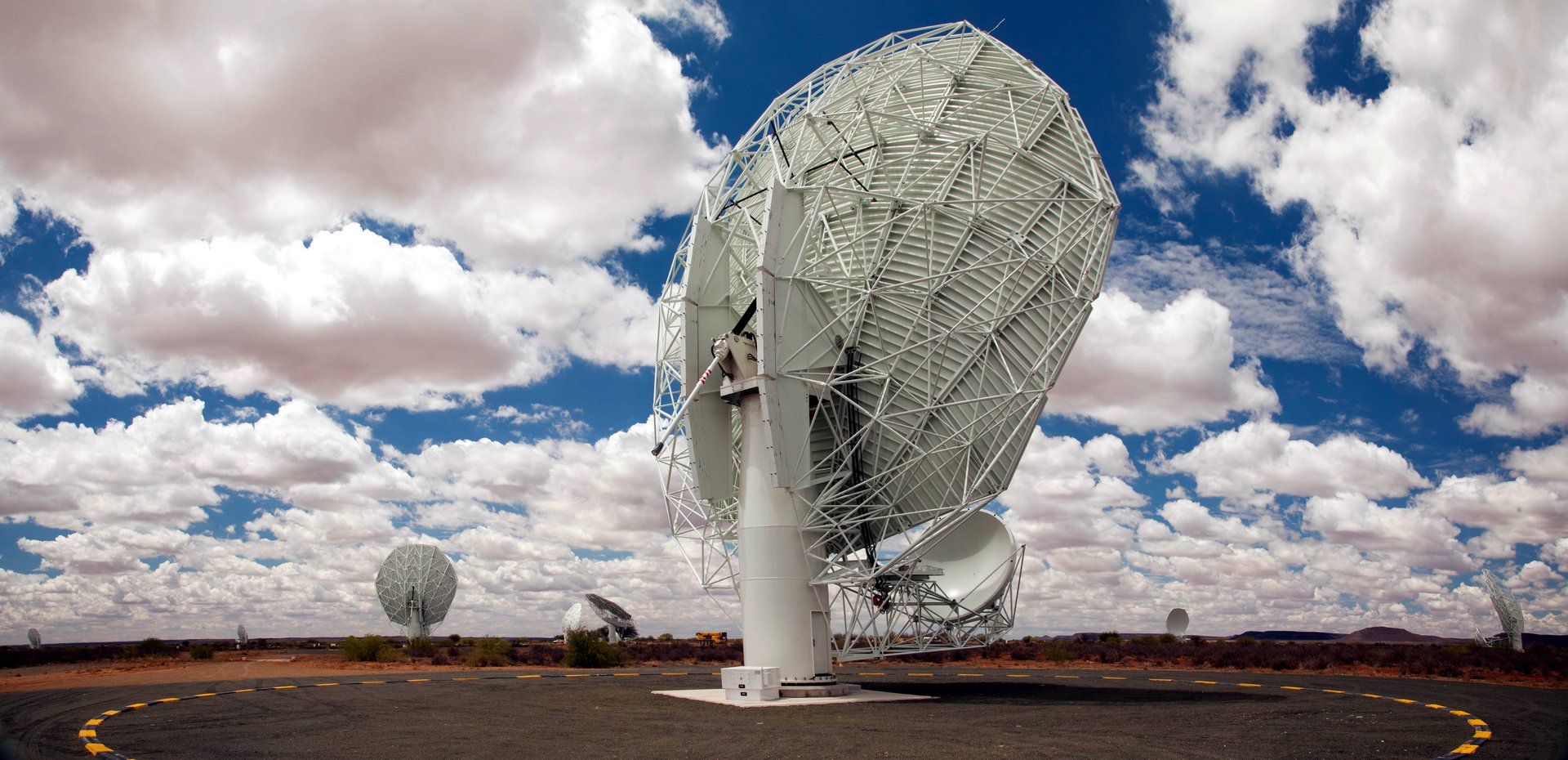
The country’s leadership is written across the night sky too. The Square Kilometre Array (SKA), hosted in the Northern Cape and co-located with Australia, is an international effort to build the world’s largest radio telescope, with a collecting area equivalent to roughly one square kilometre. It is expected to deepen humanity’s understanding of galaxies, black holes and the origins of the universe itself.
Its precursor, the MeerKAT radio telescope in the Karoo, is already a world-class discovery machine — producing detailed observations of the centre of the Milky Way and cementing South Africa’s place as a key contributor to global astronomy.
A research powerhouse, by the numbers
The output backs up the reputation. In 2023, South Africa produced 25 775 scientific articles, placing the country 29th in the world and second in Africa, behind only Egypt.
Behind those numbers are thousands of scientists, engineers, students and science communicators — proof that when South Africans are given the tools and the platforms, they deliver world-class results. The universe, quite literally, is the limit.
Photo: commons.wikimedia.org




Leave a Reply