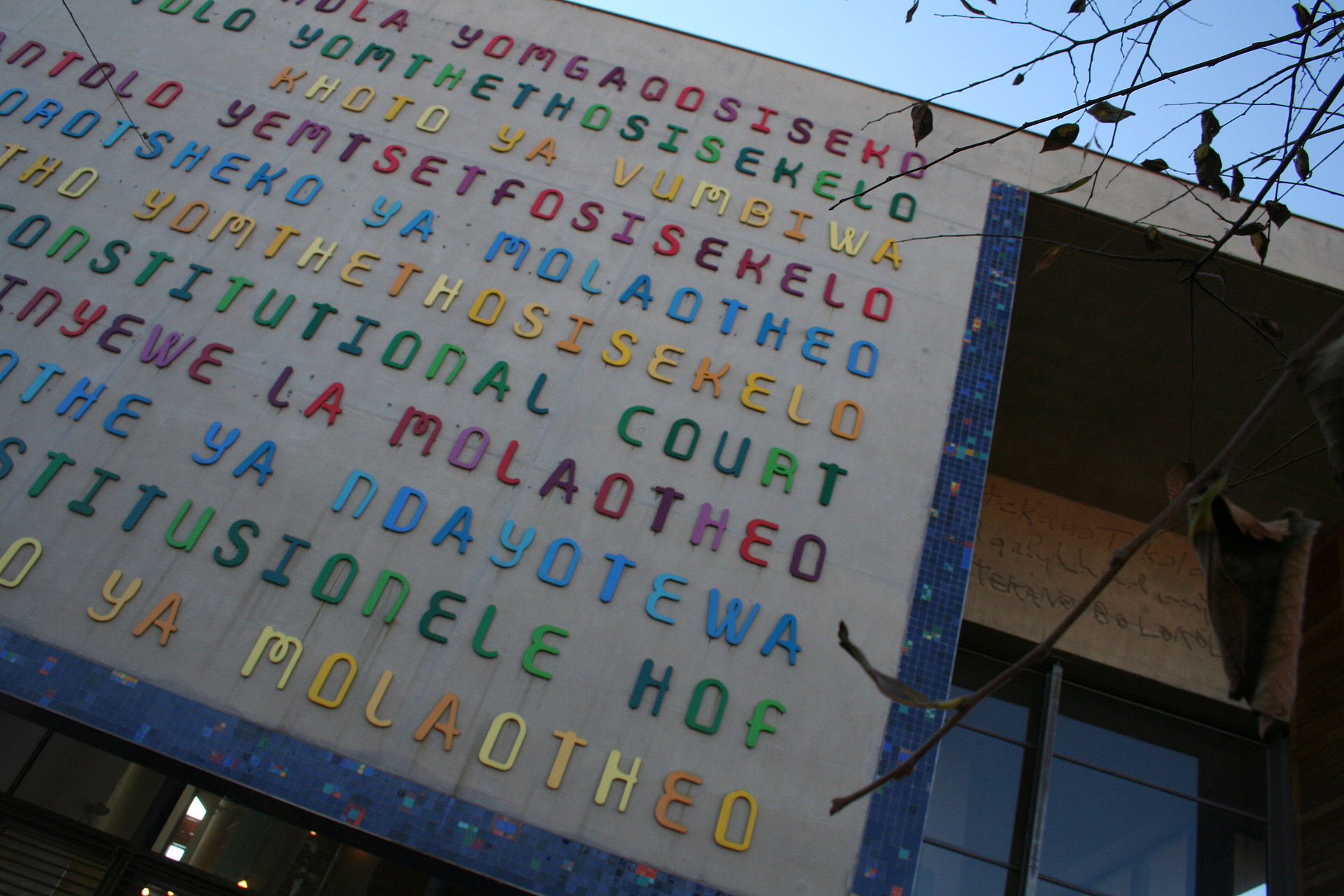
Imagine a South Africa where justice is not only heard in your mother tongue, but imagined, reasoned and written in it. That is the vision Deputy Minister of Justice and Constitutional Development Andries Nel set out this week in a public lecture on indigenous languages and the justice system at the University of Mpumalanga.
“Thirty years after the adoption of the Constitution, our task is not merely to praise its multilingual promise. It is to build the institutions through which that promise can speak. Let us ensure that every language of our people can become a language not only in which justice is heard, but through which justice is imagined, reasoned and made,” Nel said.
A Founding Promise
Nel reminded his audience that language sits in Chapter 1 of the Constitution, among its Founding Provisions. Section 6, he said, must be read together with the rights to equality, dignity, freedom of expression, cultural participation, education, access to courts and the right of an accused person to be tried in a language they understand.
He argued that a truly multilingual constitutional order requires more than interpreted access: it requires participation in the production of jurisprudence itself. “Translation, at its best, changes both sides of the encounter. It reveals assumptions that appear natural in the dominant language and creates new possibilities of legal thought,” he said.
A National Centre of Excellence
The exciting part is the plan. Nel proposed a partnership between the University of Mpumalanga, the South African Judicial Education Institute and the Brigitte Mabandla Justice College to create a national centre of excellence for justice sector education, research and professional development, built on five pillars:
- Education and training;
- Research and innovation;
- Indigenous languages and access to justice;
- Digital justice; and
- Community engagement and public legal education.
Concrete ideas on the table include joint short courses and postgraduate certificates on indigenous languages in the justice system, court interpreting and legal translation, plain-language drafting, customary law, access to justice in rural communities, and dispute resolution rooted in indigenous knowledge — plus legal dictionaries, multilingual court resources and interpreter training.
Light That Grows
Nel was honest that the work will take time — and hopeful about how it happens.
“The rising sun does not abolish the night by declaration. Light grows across the landscape. In the same way, a multilingual jurisprudence will be produced through accumulated work: one concept clarified, one interpreter trained, one student taught, one textbook written, one judgment translated. Quantitative changes can, in time, become qualitative transformation,” he said.
For millions of South Africans, that steady light promises something profound: a justice system that speaks to them, and for them, in the languages of their homes, according to SAnews.
Photo: commons.wikimedia.org










Leave a Reply