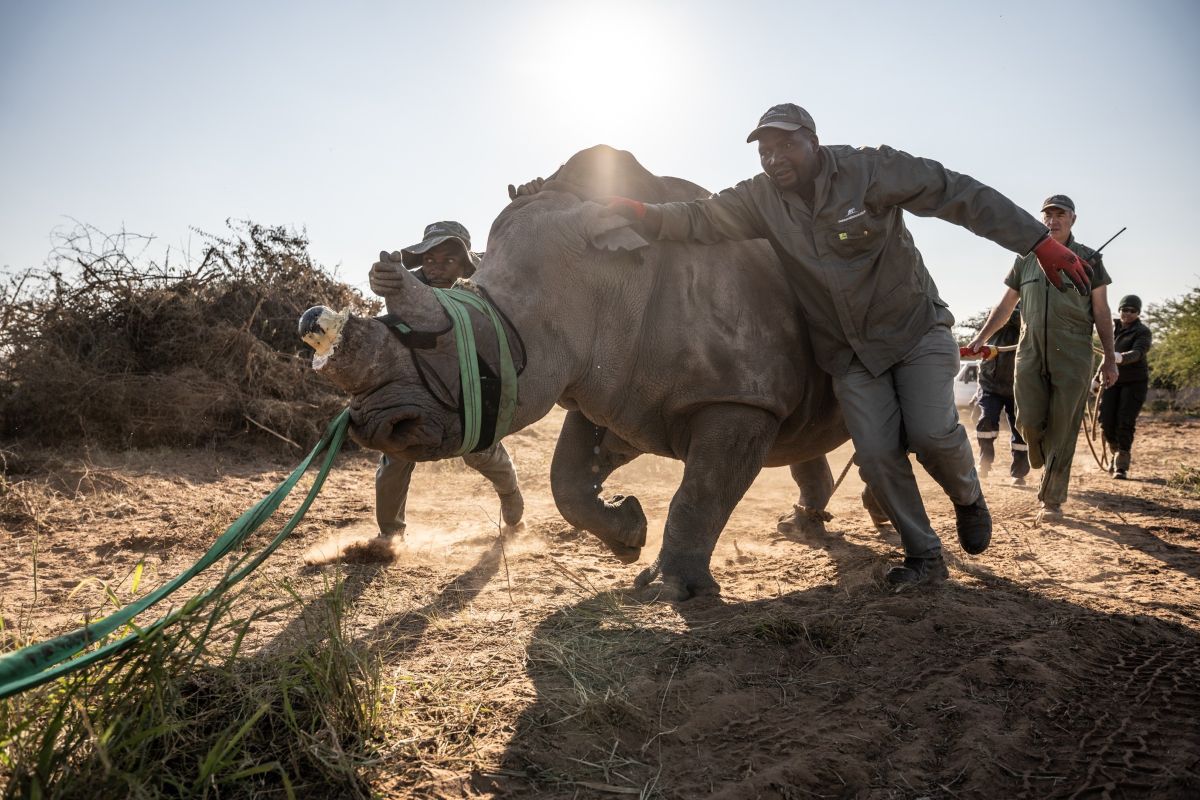
Nine female white rhinos have completed an extraordinary road trip from South Africa to Mozambique, sealing one of the continent’s great conservation comebacks. The animals were translocated from Manketti Game Reserve near Lephalale in Limpopo to Zinave National Park in June, completing the final phase of a landmark rhino restoration effort led from South African soil.
The cross-border operation was undertaken by Mozambique’s National Administration for Conservation Areas (ANAC), South African mining company Exxaro Resources and the Peace Parks Foundation, with the support of South Africa’s Department of Forestry, Fisheries and the Environment.
A founder herd four decades in the making
The nine new arrivals bring the number of white rhinos introduced to Zinave to 39, where they join 22 critically endangered black rhinos. Together they form the first viable founder populations of both species ever established in a Mozambican national park, ending more than four decades of local extinction, and both species are already breeding and giving birth in their new home.
“This translocation marks a chapter of pride and hope in Mozambique’s conservation journey,” said Pejul Calenga, Director-General of ANAC. “By returning white rhinos to Zinave, we are not only securing the future of a keystone species but also restoring ecosystem balance.”
The rhinos are protected within a specially developed high-security sanctuary, backed by significant investment in ranger capacity, surveillance systems and monitoring technology.
From ‘silent park’ to Big Five destination
A decade ago Zinave was known as the ‘silent park’, stripped of its wildlife by years of conflict. Under a 20-year co-management agreement between the Government of Mozambique and the Peace Parks Foundation, the 4,080 square kilometre park has staged a remarkable recovery.
Since 2015, some 2,431 wild animals across 16 species, including elephants, buffalo, leopards and hyenas, have been reintroduced, growing the park’s total population to just under 10,000 head of game and making Zinave Mozambique’s first Big Five national park.
South African expertise leading the way
Rhino translocations rank among the most complex operations in wildlife conservation, demanding months of planning, veterinary expertise and specialised capture and transport equipment. That South Africa’s reserves, companies and conservationists sit at the heart of this effort is a point of national pride, proof that the country’s world-leading conservation know-how is restoring wild landscapes far beyond its own borders.
With the founder herd now complete, the stage is set for Zinave’s rhinos to write the next chapter of a recovery story the whole region can celebrate.
Full details are available from the Peace Parks Foundation.
Photo: peaceparks.org (© Peace Parks Foundation)






Leave a Reply