
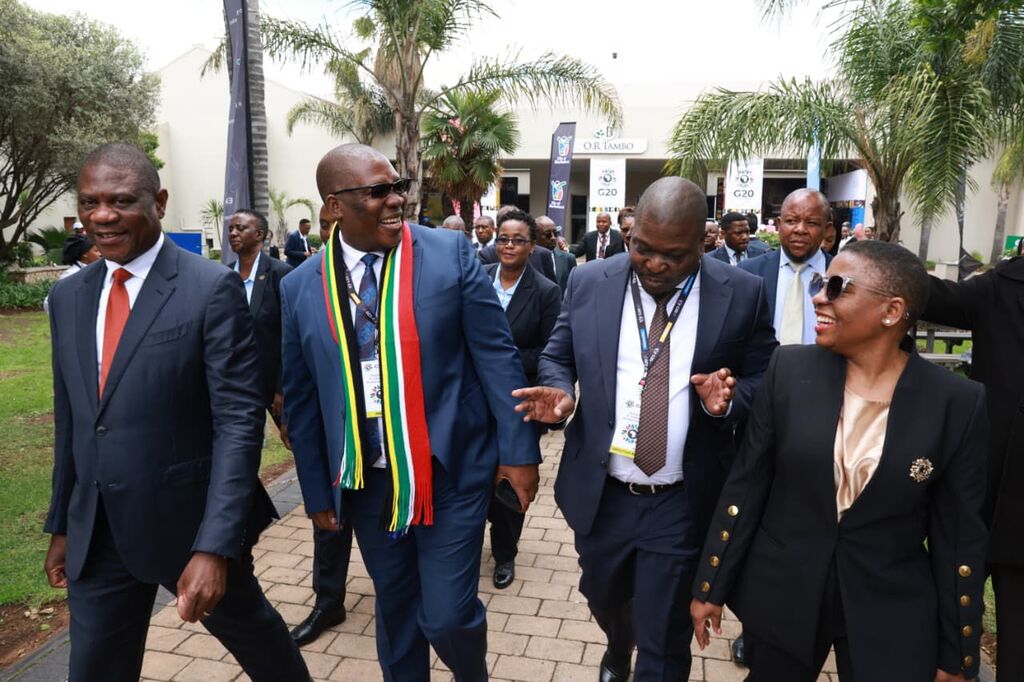
GAUTENG, South Africa – The countdown is officially over. With just one day remaining, South Africa is poised to host the G20 Social Summit, a high-level gathering focused on tackling some of the world's most pressing social and labour issues, set to run from 18 to 20 November 2025.
The three-day summit will be held at the Birchwood Hotel in Gauteng, bringing together ministers, social partners, and global thought leaders from the world's 20 major economies. The event serves as a critical platform for dialogue and collaboration, running parallel to the broader G20 discussions to ensure social justice remains at the forefront of the global economic agenda.
Under the banner "Social South Africa 2025," the summit is expected to address key themes such as inequality, the future of work in the digital age, social protection systems, and strategies for inclusive economic growth. The official hashtags #G20SouthAfrica, #ReKaofela (a Sesotho phrase meaning "for all of us" or "all together"), and #G20Social2025 are being promoted to encourage public engagement and track the conversation online.
"The G20 Social Summit is a pivotal moment for global solidarity," a senior government official previewed. "It's about building consensus on policies that leave no one behind and creating a more resilient and equitable future for all our citizens."
The choice of South Africa as the host nation underscores the country's influential role in advocating for the Global South and its commitment to placing social development at the centre of international diplomacy. The slogan "#ReKaofela" powerfully encapsulates the summit's core mission of collective action and shared prosperity.
Delegates and participants are expected to arrive throughout the day as final preparations are made at the Birchwood Hotel venue. The world will be watching as the discussions unfold, with live updates and official statements available through the summit's dedicated portal at www.g20.org.za.
BOEGOEBAAI, NORTHERN CAPE – The South African government is fast-tracking the R122.9 billion Boegoebaai Port and Rail Development, a flagship infrastructure project poised to become a vital hub for green hydrogen and commodity exports. The project, located in the remote Richtersveld municipality, has been declared a national priority for the 2025/2026 financial year.
This ambitious greenfield initiative aims to develop a deep-water port approximately 60km north of Port Nolloth, connected by a new 550km rail network to the province's existing mining and industrial centres.
Latest Developments and Project Status:
National Priority: The project was officially listed in May 2025 as one of the top seven infrastructure priorities for the current fiscal year, receiving dedicated support from Infrastructure South Africa (ISA) to streamline approvals and attract crucial private sector investment.
Procurement Underway: State-owned Transnet National Ports Authority (TNPA) has shortlisted three private sector consortia to bid on the design, funding, and construction of the new infrastructure. A tender for project preparation was issued in October 2025.
Environmental Assessment: The Council for Scientific and Industrial Research (CSIR) is leading a comprehensive Strategic Environmental Assessment (SEA). Specialist studies and public consultation processes for both the port and the adjacent Special Economic Zone (SEZ) are ongoing throughout 2024 and 2025.
Green Hydrogen Hub: The development is a cornerstone of the Northern Cape Green Hydrogen Strategy, positioning South Africa as a future key player in the global green energy market, with an estimated potential to create over 13,700 jobs.
Government entities, including Transnet and ISA, are actively working to facilitate private sector engagement, targeting an aggressive operational date for the port as early as 2026. The project represents a significant commitment to boosting the Northern Cape's economy and enhancing the country's logistical export capacity.
KIMBERLEY, Northern Cape - The Northern Cape is on the cusp of a major economic transformation with the official designation of the Namakwa Special Economic Zone (SEZ), a project hailed as a "game changer" for the region's industrial future. Located near the mining town of Aggeneys, this new SEZ is designed to harness the province's vast mineral and renewable energy resources, attracting significant investment and creating thousands of jobs.
Since its formal designation, the Namakwa SEZ has garnered substantial interest, securing over R29-billion in investment commitments for its first phase alone. The anchor investor, Vedanta Zinc International (VZI), has pledged a R16-billion investment towards its existing Gamsberg zinc mine and the proposed construction of a zinc smelter, which will be central to the SEZ's operations. Other key investors include Frontier Rare Earth, Hive Energy, and RRS Trade and Investment.
The primary focus of the Namakwa SEZ is mineral beneficiation, particularly in zinc and rare earth minerals, a strategic move to ensure more of South Africa's mineral wealth is processed domestically. The development is aligned with the Northern Cape Industrial Corridor initiative and aims to establish the region as an industrial hub for the western SADC area.
Beyond mining, the SEZ will target several other vital sectors, including:
Renewable Energy: Leveraging the Northern Cape's exceptional solar potential for green hydrogen production and other energy projects.
Agro-processing: Utilizing local agricultural resources for added value.
Infrastructure Development: Including the extension of rail and road networks, crucial for linking the SEZ to markets and potentially to the planned deep-sea port at Boegoebaai.
The economic impact is expected to be substantial, with projections indicating the project could add R1.1-billion to state tax revenue annually during operations. More importantly, it promises to create over 3,000 permanent jobs across its development phases, providing a much-needed boost to local employment and fostering a spirit of entrepreneurship in the Khâi-Ma municipal area.
Companies investing in the zone can benefit from a range of government incentives, including preferential corporate tax rates and streamlined regulatory processes, designed to make the Northern Cape a premier destination for industrial investment.
Provincial officials, with support from the national Department of Trade, Industry and Competition (dtic), are currently focusing on the next critical steps: capacitating the SEZ entity and prioritising detailed engineering designs for necessary bulk and link infrastructure. The goal is to build a robust and diversified economic ecosystem that transforms the socio-economic landscape of the province for generations to come.
For businesses and investors interested in these new opportunities, information and guidelines on SEZ benefits can be found through resources from the Department of Trade Industry and Competition or the Northern Cape Provincial Government.